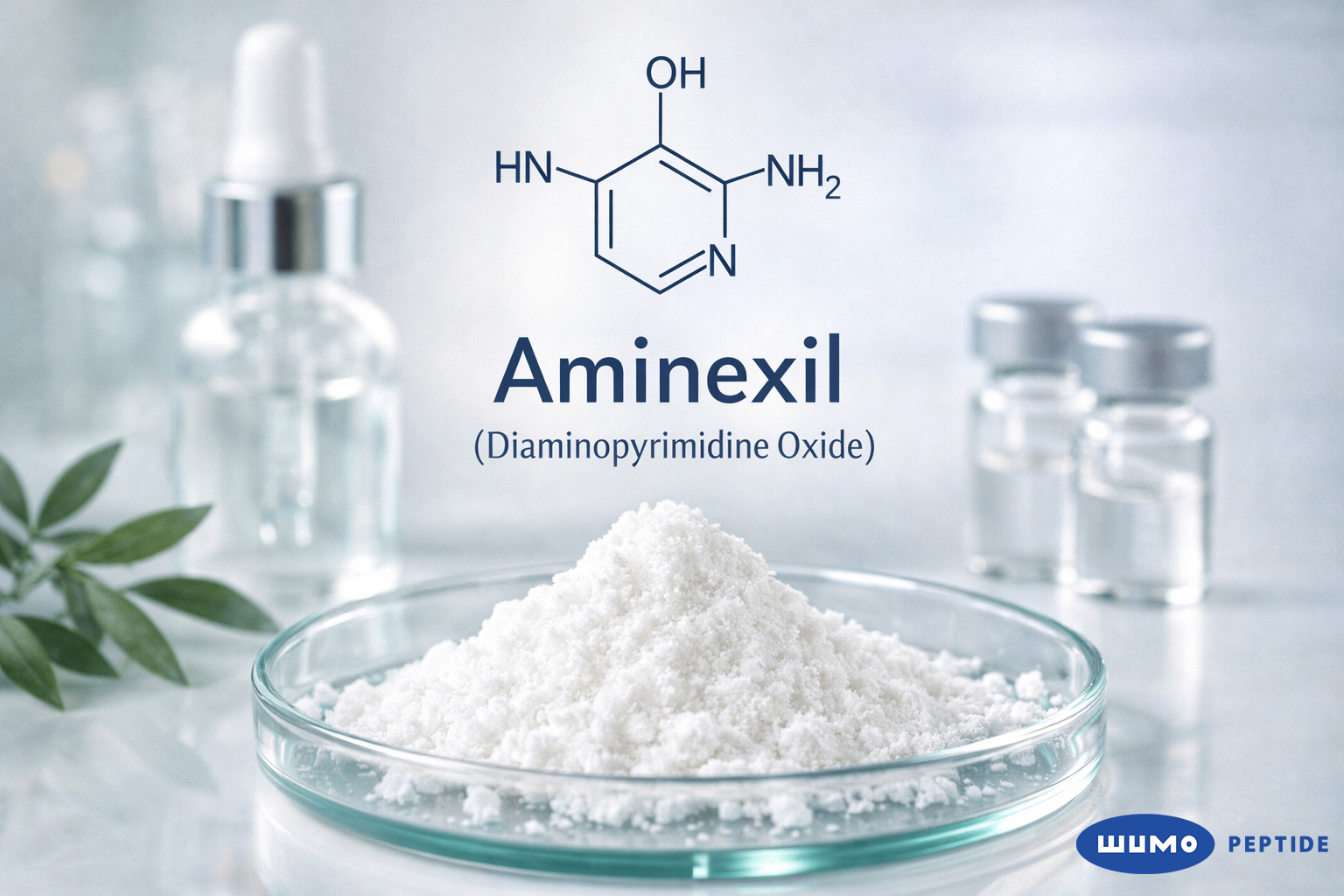
Why Aminexil Procurement Is Often a Category-Building Decision in Scalp Care
Aminexil, also known as Diaminopyrimidine Oxide, is rarely procured as just another ingredient in B2B scalp care development. In many cases, interest in Aminexil begins when a buyer is not only planning one formula, but thinking more broadly about whether to build or strengthen a scalp care category.
This makes Aminexil procurement very different from routine ingredient replenishment. For brands, OEM / ODM manufacturers, and ingredient distributors, the decision is often linked to how a scalp care line will be structured, how the category will be positioned, and whether the business is ready to support a more dedicated active-led direction.

1. Why Aminexil procurement is often tied to category planning
Some ingredients are bought to complete an existing formula. Aminexil is often reviewed when a company is deciding whether to build a more defined scalp care line in the first place.
This may happen when a buyer is planning:
a new scalp serum category
a more treatment-oriented hair care range
a line extension beyond basic shampoo and conditioner
a stronger active-led scalp care identity
a premium scalp care program with more specialized ingredients
In these cases, procurement is part of category planning, not just material sourcing.
2. Why buyers do not usually treat it as an isolated purchase
When Aminexil enters the sourcing discussion, the project is often already broader than a single SKU.
Buyers may be reviewing questions such as:
Should the brand enter scalp care more seriously?
Does the line need a more specialized active ingredient?
Is the project meant to support one product only, or a wider category rollout?
Will the ingredient become part of a long-term active system?
This means procurement is connected to line architecture, not only ingredient availability.
3. How category-building procurement differs from routine raw material purchasing
Routine raw material purchasing often starts with immediate operational needs. Category-building procurement usually starts with business direction.
For Aminexil, the sourcing discussion may involve:
whether the brand wants to establish a stronger scalp care identity
whether the OEM project is intended as a one-off formula or a longer program
whether the ingredient supports the intended market positioning
whether future product expansion is already being considered
Because of this, buyers often need to think further ahead before moving to a serious quotation review.
4. What makes the procurement decision more complex
A category-building ingredient usually creates more internal discussion than a standard line-extension raw material.
Before moving forward, buyers often need to align:
target product types
The commercial goal of the scalp care range
whether the project is exploratory or already planned for launch
how strongly the final line will rely on active-ingredient positioning
whether future SKUs may use a connected ingredient strategy
This makes procurement more strategic and less transactional.
5. When the project is strong enough to move from concept to sourcing
Not every scalp care idea should become a sourcing program immediately. Procurement usually becomes more practical when the buyer can already define:
the intended format, such as serum, tonic, or treatment product
the stage of the project
The role Aminexil is expected to play in the line
whether the sample review is the next step or whether a quotation is already required
whether future commercial continuity matters from the beginning
At this point, sourcing discussion becomes much more useful because it is connected to a real category plan.
6. Why category-building procurement requires longer-term thinking
When Aminexil is procured as part of scalp care category building, the first order is only one part of the decision.
The bigger issue is whether the ingredient can support:
a stronger scalp care identity
future SKU development
a more advanced active-led range
repeat purchasing as the category grows
That is why Aminexil procurement is often less about short-term availability and more about whether the category direction is worth committing to.
Final Thoughts
Aminexil procurement is often a sign that a buyer is moving beyond general hair care and toward a more deliberate scalp care strategy. For B2B projects, the real question is not only whether the ingredient can be sourced, but whether it fits the category structure the business is trying to build.
When viewed this way, procurement becomes part of long-term line planning rather than a simple ingredient purchase.
Need help with peptide sourcing or technical questions?
Use the form below to ask about product fit, documentation, OEM/ODM support, or a specific project requirement. We will reply within 24 hours.
-
![]() Why Palmitoyl Pentapeptide-4 Procurement Is Often Linked to Anti-Aging Line Extension
Why Palmitoyl Pentapeptide-4 Procurement Is Often Linked to Anti-Aging Line Extension -
![]() How Peptide Purity Affects Skincare Manufacturing Decisions
How Peptide Purity Affects Skincare Manufacturing Decisions -
![]() Palmitoyl Pentapeptide-4 in Skincare: Benefits, Applications & Supply Guide
Palmitoyl Pentapeptide-4 in Skincare: Benefits, Applications & Supply Guide -
![]() Aminexil for Scalp Care Formulations: B2B Ingredient Guide
Aminexil for Scalp Care Formulations: B2B Ingredient Guide -
![]() How Buyers Procure Acetyl Hexapeptide-8 for Hero Anti-Aging SKUs
How Buyers Procure Acetyl Hexapeptide-8 for Hero Anti-Aging SKUs -
![]() How B2B Buyers Select Cosmetic Peptides for Anti-Aging Product Concepts
How B2B Buyers Select Cosmetic Peptides for Anti-Aging Product Concepts